
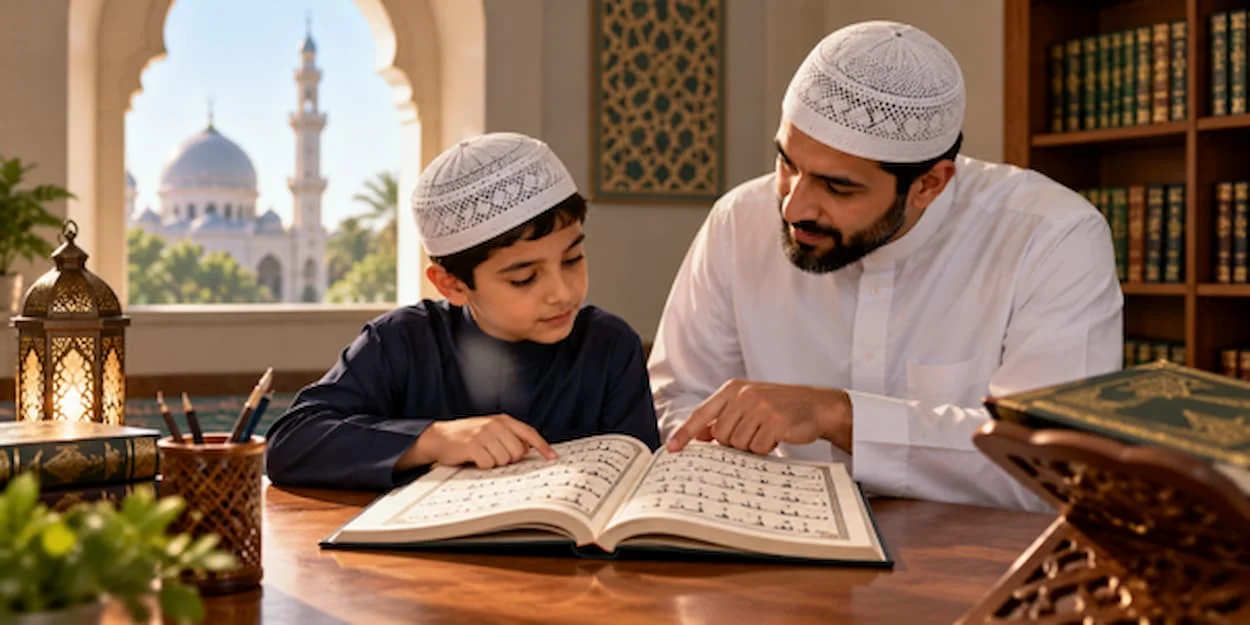
Yes, you can learn to read Arabic without speaking it fluently. Reading and speaking are related skills, but they do not develop at the same speed. You can learn Arabic letters, sounds, words, and Quranic passages without having long conversations in Arabic. At Masjid As-Siddiq—Islamic Center of West Georgia, we help learners see Arabic reading as a skill they can build gradually.
Do You Need to Speak Arabic Before You Can Read It?
No, speaking Arabic is not a requirement for learning to read it. Think about how children learn to read English. A child may recognize letters and read simple words before holding a long conversation. Arabic can be learned in a similar way. Reading requires you to recognize letters and connect them with sounds. You also need to notice how letters join together.
Speaking requires other skills. You need to recall words, form sentences, listen to another person, and respond quickly. Those skills can develop later. A learner may therefore read Arabic quite well while still speaking very little Arabic.
Why Does Reading Arabic Feel Difficult at First?
Arabic can look unfamiliar when you first see it. The writing moves from right to left. Letters can also change shape depending on their position within a word. That can feel confusing during the first few lessons. However, the basic idea becomes easier with practice.
We recommend learning a small number of letters at a time. Once those letters feel familiar, you can start joining them together. You should also practice reading simple words aloud. That connection between seeing and hearing a word can strengthen your memory. You do not need to rush through the alphabet. A steady pace usually creates a stronger foundation.
What Should You Learn First?
Beginners should start with the Arabic alphabet and basic letter sounds. Each letter has its own sound. Some sounds may feel new if your first language is English. Learning the correct sound early can prevent pronunciation problems later. Next, you can learn how letters connect. Arabic letters may look different when they appear at the beginning, middle, or end of a word. That change can seem strange at first.
Regular reading practice helps your eyes recognize these patterns more quickly. You can then move toward short words and simple Quranic phrases. The goal is not to memorize everything. The goal is to become comfortable with what you see.
How Does Quran Reading Change the Learning Process?
Quran reading gives many learners a clear reason to study Arabic. You may already know some surahs by memory. Reading them from the Arabic text can help you connect familiar recitation with written words. Repeated exposure can also help your reading become smoother. The same words may appear across different surahs. You begin noticing familiar letters and patterns.
Learning to learn the Quran in Arabic can also encourage you to study basic meanings. That combination can make your Quran practice more meaningful. We should still remember that reading Arabic does not automatically give full understanding of the Quran. Meaning requires study, translation, and guidance from reliable sources.
What If You Only Want to Read the Quran?
That is a perfectly reasonable goal. You do not need to become fluent in spoken Arabic to read the Quran. Your lessons can focus on the skills needed for Quran reading. You can work on letters, vowel marks, pronunciation, connected letters, and common reading patterns. Later, you can add vocabulary and basic Quranic Arabic.
Many learners find that a clear goal makes practice easier. If your main aim is Quran reading, tell your teacher from the beginning. Your lessons can then focus on what you actually need.
Should You Read Arabic Aloud?
Yes, reading aloud can be very helpful. Your eyes learn to recognize the written form. Your voice helps connect that form with its sound. Listening to yourself can also reveal pronunciation problems. You can start with short words. Then read short Quranic passages. Try not to rush.
Clear reading is more important than reading quickly. A teacher can listen and correct your pronunciation. Regular correction can help you build good habits before you move to longer passages.
What Skills Should You Build Together?
Reading becomes easier when a few basic skills grow together. You should give attention to letter recognition, pronunciation, and reading speed. Vocabulary can grow alongside these skills. Listening can also support better pronunciation. You do not need to become fluent in conversation. Still, hearing Arabic can help you become more familiar with its sounds.
A simple practice routine can include:
- Review a few Arabic letters and their sounds.
- Read short words with their vowel marks.
- Read a short Quranic passage aloud.
- Listen to the same passage and follow the text.
- Review words you have already learned.
Keeping the routine simple makes it easier to continue.
Frequently Asked Questions
Can I learn to read Arabic without speaking it?
Yes, reading Arabic does not require spoken fluency. You can first learn letters, sounds, vowel marks, and connected words. Many learners focus on Quran reading without developing conversation skills. Later, you can add speaking practice if your goals change.
How long does it take to learn how to read Arabic?
The timeline depends on your starting point and practice routine. Someone who practices daily may recognize letters and simple words fairly soon. Reading full Quranic passages smoothly takes longer. Regular lessons and short daily practice can make steady progress easier.
Can I learn the Quran in Arabic without speaking Arabic?
Yes, you can learn Quran reading without speaking Arabic fluently. Start with letters, sounds, vowel marks, and pronunciation. You can then add common Quranic vocabulary and meanings. We recommend learning with a qualified teacher for accurate reading and proper guidance.
Is Arabic reading easier for children than adults?
Children and adults can both learn Arabic reading successfully. Their learning styles may differ, but regular practice helps everyone. Adults can benefit from clear goals and structured lessons. Children may benefit from repetition and activities that keep lessons engaging.
Should I learn speaking Arabic before reading?
No, speaking does not need to come first. You can learn how to read Arabic directly through letters, sounds, vowel marks, and reading practice. Speaking can be added later. Your learning order should depend on your personal goals and the type of Arabic you need.
Begin With the Arabic You Need Most
Arabic does not have to become a huge project before you start. You can begin with one letter, one sound, and one short word. Those small steps can eventually lead to reading complete passages with confidence. Quran reading can give your learning a clear and meaningful purpose. You can also add vocabulary and basic meanings as your skills grow. At Masjid As-Siddiq—Islamic Center of West Georgia, we welcome learners at different stages.
Some people may be starting from the alphabet. Others may already read slowly and want better pronunciation. We can help you take the next sensible step. If your goal is to learn the Quran in Arabic, you do not need to wait until you speak Arabic fluently.
Start with reading. Build your skills steadily. Add new areas when you feel ready. Arabic learning becomes much less intimidating when we give ourselves permission to start small. Your first goal does not need to be fluency. It can simply be reading one more line correctly than you could yesterday.
